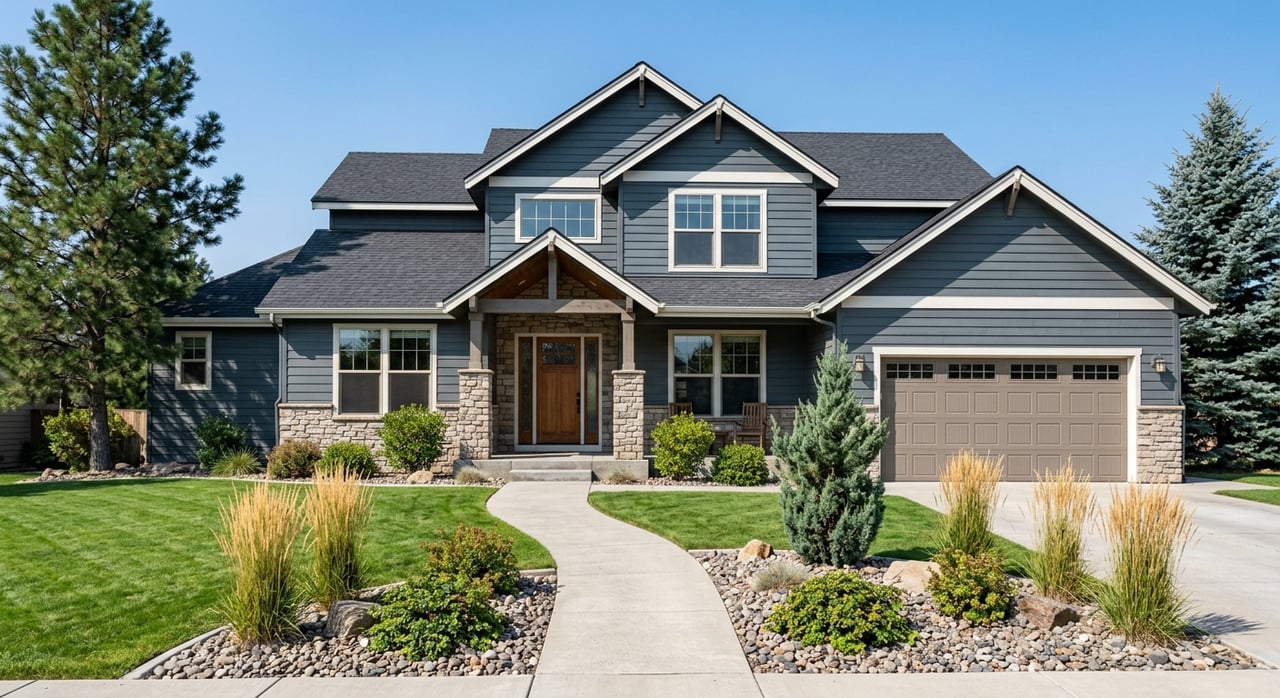
Highlands Ranch vs Parker: Choosing the Right Suburb
May 21, 2026
May 21, 2026
Trying to choose between Highlands Ranch and Parker? It is a common question for buyers moving around South Metro Denver, and the answer usually comes down to how you want to live day to day. If you understand the differences in governance, housing mix, amenities, and ownership costs, you can narrow your search faster and feel more confident in your decision. Let’s dive in.
Both communities are in Douglas County and both are popular with buyers who want suburban living, access to recreation, and a location within the South Metro area. They also share an important similarity for many households: both are primarily served by Douglas County RE-1, which the Colorado Department of Education lists as Accredited in 2025.
The bigger differences show up in how each place is structured. Highlands Ranch operates more like one large master-planned community with a visible amenity system, while Parker functions more like an incorporated town with many separate neighborhoods, subdivisions, and HOA setups.
Highlands Ranch is an unincorporated 22,000-acre master-planned community founded in 1981, with about 103,000 residents. The Highlands Ranch Metro District reports 26 parks, more than 70 miles of trails, and 2,644 acres of open space. HRCA also says members have access to four private recreation centers and the 8,200-acre Backcountry Wilderness Area.
For many buyers, that creates a more consistent living experience across the community. Amenities, rules, and overall planning tend to feel coordinated, which can be a major plus if you want predictability and a strong community framework.
Parker is an incorporated town with a July 1, 2024 Census estimate of 65,473 residents. The town reports 174.9 acres of parkland and 44.46 miles of trails in its Q2 2025 performance measures. It also maintains resources for more than 100 Parker HOAs, which points to a more decentralized neighborhood structure.
That usually means more variation from one subdivision to the next. In Parker, house style, neighborhood character, HOA dues, and shared amenities often depend more on the specific community than on the town as a whole.
Highlands Ranch remains heavily single-family, but it also includes a meaningful amount of attached housing. A Highlands Ranch Metro District budget document says the area has zoning for about 30,000 single-family homes and 9,000 multi-family units. Highlands Ranch Water says it serves more than 30,000 single-family homes and 7,200 multi-family units.
In practical terms, you are likely to find a broad but fairly cohesive suburban housing mix. If you like the idea of established planning, recognizable neighborhood patterns, and a community-wide amenity identity, Highlands Ranch may feel like the cleaner fit.
Parker’s 2035 Master Plan says the town should include a variety of unique neighborhoods and housing opportunities for residents of all ages. The same plan notes that housing was still predominantly single-family detached homes at 75% in 2011. The town also maintains separate design standards for commercial, industrial, and multifamily residential development.
That supports what many buyers notice on the ground: Parker can feel more diverse in style and layout. Some neighborhoods may feel newer and more uniform, while others offer a different rhythm, lot pattern, or amenity package.
If amenities are high on your list, Highlands Ranch stands out for its centralized recreation system. The combination of parks, trail miles, open space, four private recreation centers, and access to Backcountry Wilderness gives buyers a clearly defined lifestyle package.
This setup can be especially appealing if you want shared amenities that are easy to understand upfront. You are not piecing together the experience one subdivision at a time as often as you might in another suburb.
Parker’s recreation profile is more town-based and public-facing. The town highlights facilities such as the Parker Recreation Center, Parker Fieldhouse, H2O’Brien Pool, along with its parks, trails, and open space network.
For buyers, that can translate to flexibility. Instead of one central community amenity structure, your experience may depend more on the neighborhood you choose and how much you plan to use town-wide facilities.
On Census medians, Highlands Ranch has the higher owner-occupied home value at $712,700, compared with $646,300 in Parker. Median monthly owner cost with a mortgage is also slightly higher in Highlands Ranch at $2,823 versus $2,773 in Parker. Without a mortgage, the median monthly owner cost is $810 in Highlands Ranch and $768 in Parker.
The key takeaway is that the home-value gap is larger than the monthly owner cost gap. So while Highlands Ranch is more expensive on paper, the monthly ownership difference is not as dramatic as the median value difference might suggest.
Property taxes in Douglas County depend on the full mix of taxing authorities tied to a specific parcel. County, school, town, water, fire, library, and special district levies all stack together, so there is no one universal tax rate for Highlands Ranch or Parker.
In the county’s 2025 tax district list, representative Highlands Ranch examples show total mill levies of 98.821 and 107.621. Representative Parker examples show 85.123, 90.773, 90.894, and 98.894, depending on subdivision and overlays. That is why parcel-level review matters so much before you buy.
Highlands Ranch has a more visible community-wide assessment structure. HRCA says 2025 assessments are $684 per year for most homeowners, and Highlands Ranch Water separately publishes utility fees for water, wastewater, stormwater, streetlights, and infrastructure.
Parker is less uniform. Because the town includes many separate subdivisions and HOA arrangements, recurring dues and amenity costs can vary significantly by neighborhood. If you are considering Parker, it is smart to compare HOA documents and fee structures property by property.
Highlands Ranch access patterns center around I-25, C-470, Highlands Ranch Parkway, Town Center Drive, and US 85. Census QuickFacts show a mean travel time to work of 24.2 minutes in Highlands Ranch.
If your regular routes depend on I-25 or C-470, Highlands Ranch may line up better with your routine. For many buyers, shaving even a few minutes off a daily drive can make a real difference over time.
Parker’s official road network centers on Parker Road, SH-83, E-470, and nearly 500 lane miles of town roads. Census QuickFacts show a mean travel time to work of 26.1 minutes in Parker.
That does not make Parker difficult for commuters. It simply means the fit may be stronger if your travel patterns lean toward Parker Road, E-470, or other southeast Douglas County destinations.
Highlands Ranch tends to make sense if you want:
For many buyers, the appeal is simplicity. The community identity is strong, and the amenity framework is easy to understand.
Parker tends to fit buyers who want:
Parker often works well if you want more options in neighborhood style and are comfortable doing a little extra due diligence on each community.
No matter which suburb you prefer, the real decision should happen at the property level. In both Highlands Ranch and Parker, parcel-specific details can shape your monthly costs and overall experience more than the ZIP code alone.
As you compare homes, focus on these three items:
This is especially important in Parker, where HOA structures are intentionally decentralized. It also matters in Highlands Ranch, where tax districts and HOA status can still vary by property.
If you want help sorting through the details, Andrea Wright offers concierge-level guidance for buyers moving within or into South Metro Denver, with local insight that helps you compare communities with clarity and confidence.
ANDREA'S MANTRA ECHOES HER DEDICATION: "LUXURY ISN'T A PRICE-POINT - IT'S MY SERVICE STANDARD!"

482 West Happy Canyon Road
Castle Pines, CO 80108