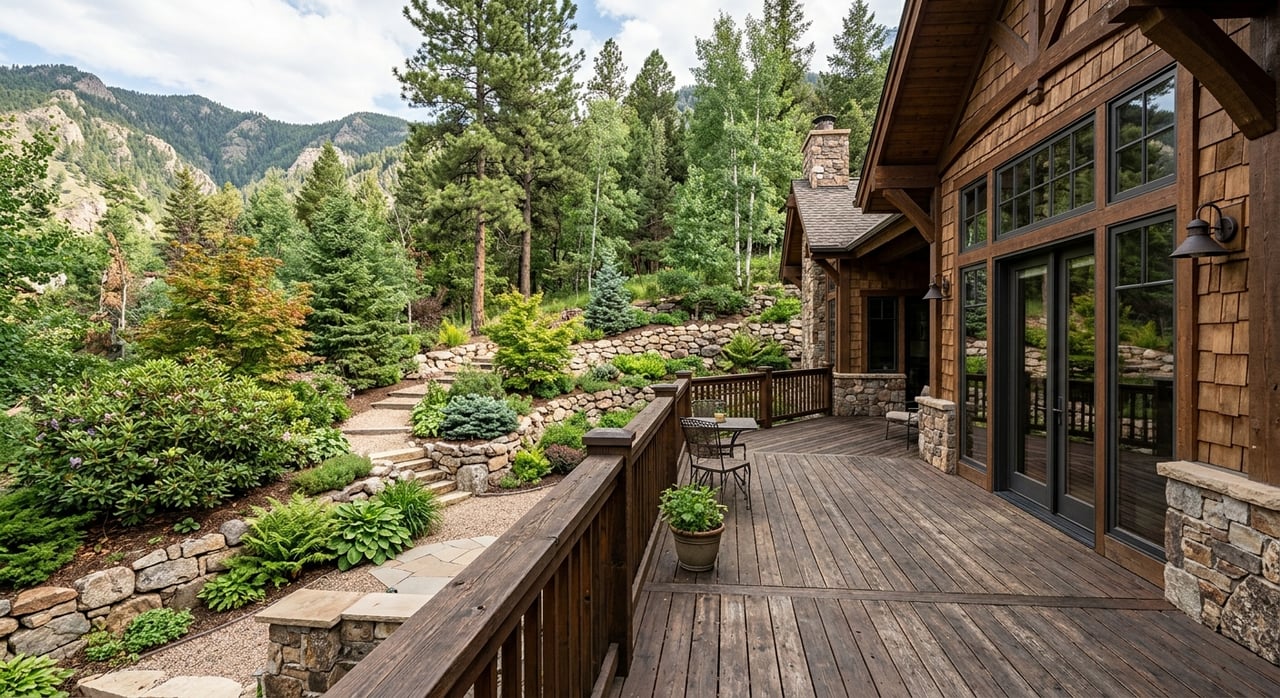
Weekday-To-Weekend Living In Greenwood Village
June 18, 2026
June 18, 2026
If your weekdays are packed with meetings, commutes, and calendar alerts, where you live can either add stress or make life feel easier. Greenwood Village stands out because it blends a major business hub with residential areas, parks, and trails that support a calmer pace after work. If you are wondering what day-to-day life really feels like here, this guide will show you how Greenwood Village shifts from productive weekdays to active, enjoyable weekends. Let’s dive in.
Greenwood Village sits in Arapahoe County, just south of Denver. The city reports 15,691 residents, a daytime population of about 38,500, and a land area of 8.3 square miles, which tells you a lot about how the area functions during the workweek.
That large daytime population reflects the city’s strong employment base and commuter activity. Greenwood Village describes itself as a blend of urban and residential areas, with nationally recognized business parks and neighborhood associations, which helps explain why it appeals to people who want convenience without giving up access to outdoor space.
A big part of Greenwood Village’s identity is its connection to business and commuting. The city is home to part of the Denver Tech Center, along with Greenwood Plaza, the Village Center, and other business developments.
It also names major employers such as Empower, Red Robin, Merrick and Company, Fidelity Investments, and CoBank. For many buyers relocating to the South Metro Denver area, that job base is one of the first reasons Greenwood Village makes the short list.
When people talk about the DTC, they often use it as shorthand for the whole area, but there is an important distinction. Greenwood Village contains a major part of the Denver Tech Center, but the district extends beyond Greenwood Village itself.
That matters if you are comparing commute patterns, lifestyle options, and housing locations. A more accurate way to think about Greenwood Village is that it places you close to a significant section of the DTC while also offering residential pockets that feel separate from office concentration.
Greenwood Village works well for people who want more than one way to get around. The city notes direct access to I-25 and adjacency to I-225, which helps if your workdays take you across the metro area.
Transit is another practical advantage. Greenwood Village says it has three light rail stations within city boundaries: Arapahoe at Village Center, Orchard, and Dayton Street.
RTD lists Arapahoe at Village Center and Orchard as rail station park-and-rides with E and R line service. That gives you options if you want to balance driving with rail access instead of relying on one commute style every day.
For many professionals, weekday quality of life comes down to small things. Can you grab lunch easily, meet a client without driving far, or fit an errand into the middle of a busy day?
Greenwood Village scores well on that front because the business concentration supports plenty of nearby dining and service options. Visit Denver describes the DTC as a hub for local, national, and international businesses and notes a wide range of restaurants, from higher-end dining to more casual spots.
You can see that flexibility in a few Greenwood Village examples. Ocean Prime Denver Tech Center offers weekday lunch hours and an outdoor terrace, while Mangia Bevi Cafe in Palazzo Verdi serves weekday breakfast and lunch.
Pindustry adds another layer, with breakfast, lunch, dinner, rooftop space, and weekend live music. Together, those examples show how the area supports both efficient workday meals and more social after-hours plans.
What makes Greenwood Village especially appealing is that the workday energy does not tell the whole story. Once you step away from office buildings and commute routes, the city has a strong parks-and-trails system that shapes everyday living in a different way.
The city says its Parks, Trails, and Recreation Department maintains more than 440 acres of parks, trails, and open spaces. Its public information also reports 31 parks and roughly 40 to 47 miles of trails and paths, depending on the source page, so the safest takeaway is simple: Greenwood Village offers an extensive trail and park network for a city of its size.
If you like to reset with a walk, run, or bike ride after work, Greenwood Village gives you several ways to do that. The city says its trail system supports biking, walking, running, and horseback riding.
That variety helps the area feel more livable for people who want outdoor access built into the week, not saved only for special occasions. It also supports the idea of trail-connected suburban living, especially in parts of the city tied to the DTC, Village Greens, the High Line Canal, and Cherry Creek Trail links.
Greenwood Village’s parks are not all the same, which is part of the appeal. Marjorie Perry Nature Preserve offers quieter open space, while Westlands Park and Silo Park support outings like playground time and picnics.
William McKinley Carson Park & Skate Park adds a skate-focused option, and the city also highlights equestrian parks and trail crossings. Westlands Park, in particular, includes multiple play areas, fields, a pond, a hike and bike trail, pickleball courts, and a basketball court.
By the weekend, Greenwood Village can feel very different from its weekday identity. Instead of focusing on business parks and commute routes, you start to notice the open space, cultural programming, and nearby regional recreation.
That shift is a major reason the city appeals to buyers who want practical weekday access and a more relaxed off-hours rhythm. You are not choosing between convenience and lifestyle quite as sharply as in some other business-centered areas.
Village Greens Park North is one of the strongest examples of that weekend shift. The park includes a 1.2-mile loop that connects to the Cherry Creek Trail and the Dayton Street Light Rail Station.
It also offers disc golf and a mountain bike skills course. That mix creates a useful weekend anchor for residents who want easy access to outdoor activity without leaving the city.
The High Line Canal offers a very different mood. The Greenwood Village segment is a 2.3-mile one-way stretch known for a quiet, country atmosphere, horse pastures, and rolling hills.
If your ideal weekend includes a slower walk or a peaceful run, this corridor gives you that contrast. It is one of the clearest reminders that Greenwood Village is not just a corporate address.
For bigger outdoor plans, Cherry Creek State Park is the obvious nearby add-on. Colorado Parks and Wildlife describes it as a 4,200-acre recreation area with 35 miles of trails and an 880-surface-acre reservoir used for boating, biking, hiking, picnicking, and more.
That nearby access matters if you want room to spread out on weekends. You can enjoy Greenwood Village’s local trail network during the week, then shift to larger-scale recreation without a major drive.
Greenwood Village is not only about work and outdoor recreation. The city also has an arts and events layer that adds variety throughout the year.
The Curtis Center for the Arts offers free exhibits, classes, lectures, and cultural events. The city calendar also highlights recurring programming such as Greenwood Village Day, Art on the Green, and the Mobile Concert Series.
Fiddler’s Green Amphitheatre is another notable piece of the local lifestyle picture. Located in Greenwood Village, the venue seats 17,000, and Visit Denver says it draws more than 200,000 annual visitors for concerts and events.
Greenwood Village tends to fit buyers who want efficiency during the week and breathing room after hours. If your schedule includes office time in or near the DTC, regular regional travel, or a commute that benefits from I-25, I-225, or light rail access, the location can make daily life simpler.
It can also appeal if you do not want to feel surrounded only by offices. The city’s residential pockets, trail connections, parks, and event spaces create a more layered lifestyle than many people expect at first glance.
For relocating buyers, that balance is often the deciding factor. You can prioritize practical access to work while still looking for a home base that supports walks, recreation, cultural events, and easier weekends.
Lifestyle fit is not just about square footage or finishes. It is also about how a location supports your real routine from Monday morning through Sunday evening.
In Greenwood Village, the strongest story is the contrast. Weekdays are shaped by business activity, transit access, and convenience, while evenings and weekends open up to trails, parks, arts, and nearby regional recreation.
If you are relocating or making a move within South Metro Denver, that kind of balance is worth looking at closely. And if you want tailored guidance on where Greenwood Village fits into your broader home search, Andrea Wright offers concierge-level support designed to make your move more informed and far less stressful.
ANDREA'S MANTRA ECHOES HER DEDICATION: "LUXURY ISN'T A PRICE-POINT - IT'S MY SERVICE STANDARD!"

482 West Happy Canyon Road
Castle Pines, CO 80108